
Susan Young's
Amplify Blog
How Small Talk Drives Business

Small talk is a big deal.
Here's why it matters.
Because it drives revenue and requires subtle, respected confidence.
Yet most say low confidence holds them back at networking events, meetings, and conferences.😕
No more excuses!
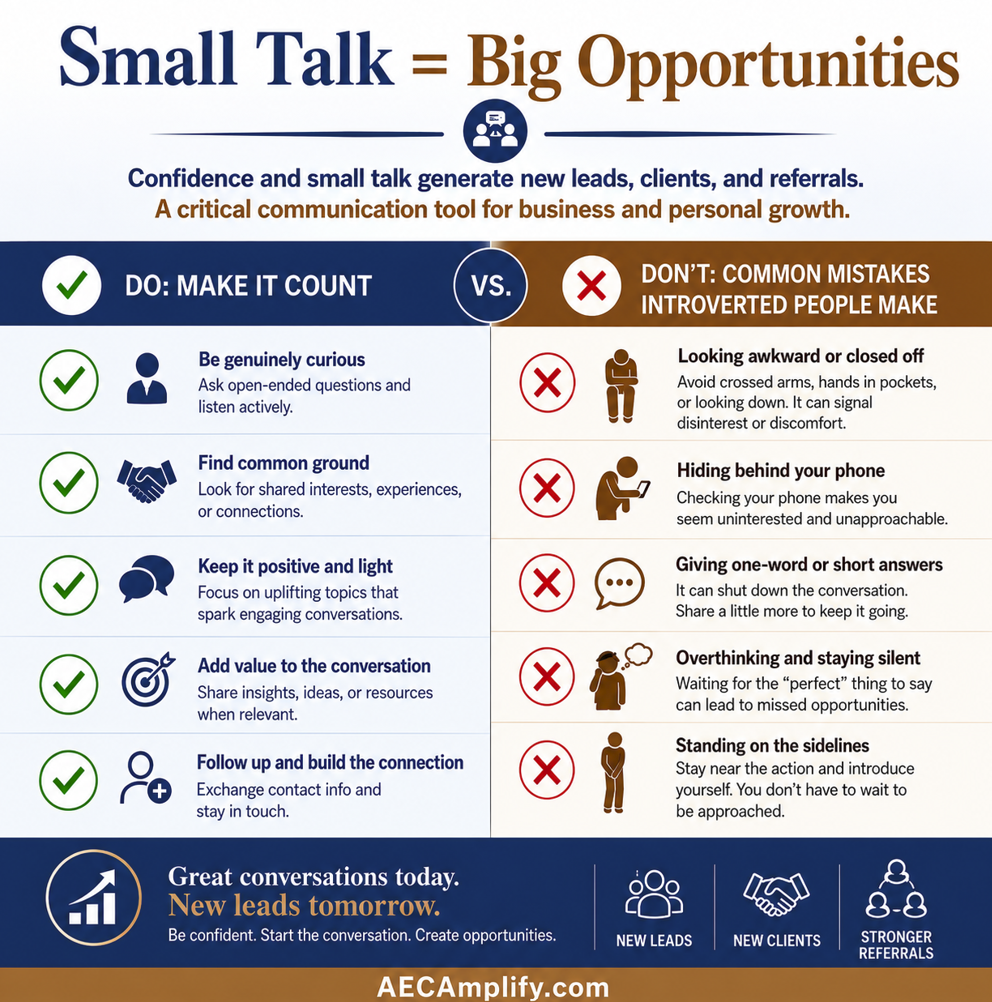
➡️Use the communication tips below to boost your confidence and create stronger business connections.
 .
.
Strategic Networking Grows Business
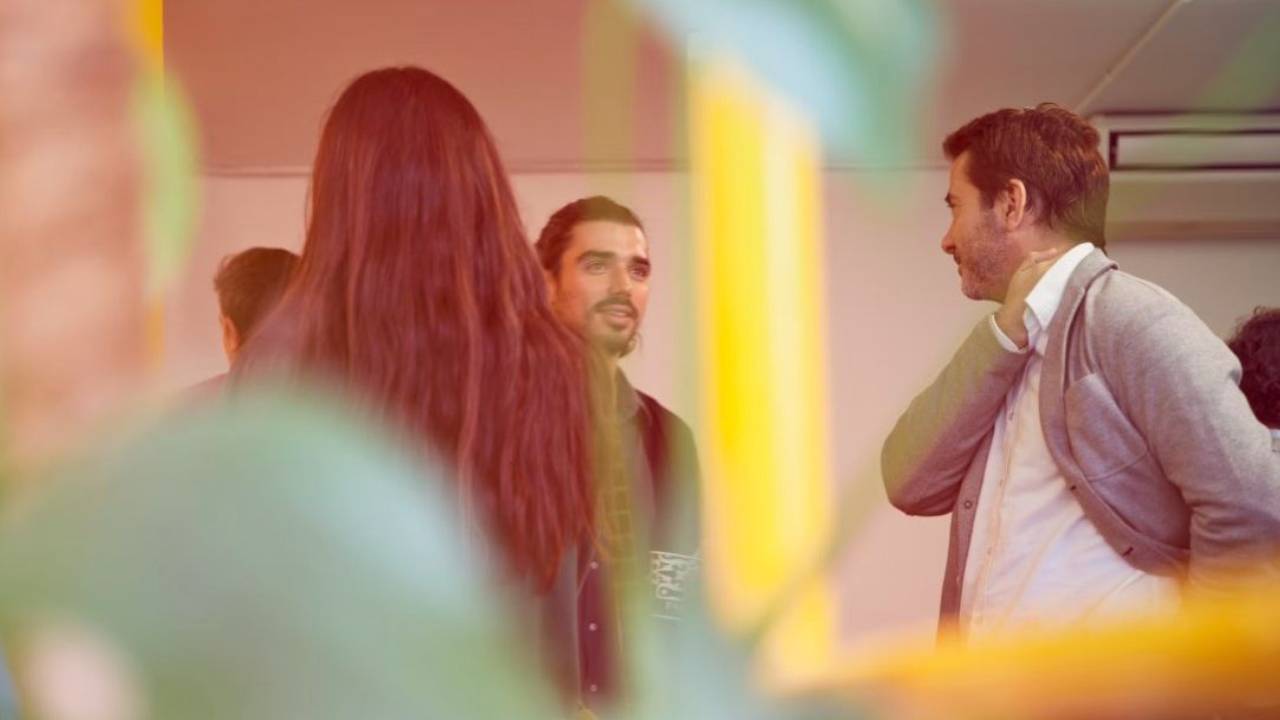
Showing up at a networking event or conference doesn't count as business development.
Choose events carefully and strategically so you attract new relationships and opportunities.
Yes, this includes making small talk 😮
Before putting something on your calendar, consider:
🎯Will your ideal clients be there?
🎯What is your intention?
🎯Who do you want to meet, and why?
🎯How will you mingle and meet new people?
🎯How will you introduce yourself?
There is an art and science to successful networking.
Do you and your teams know how to generate leads and create exciting opportunities at seemingly ordinary events?
If not, you're wasting precious time and your firm is losing money.
PS: Get your nose out of your phone!


The Costly Unneccesary Risk A/E/C Keeps Taking
Trust and nurturing relationships are mission critical in business and life.
The best wisdom and career advice I've ever heard is in this short video clip.🤩
And it applies to the A/E/C industry and your firm.
Take a look.⬆️⬆️⬆️
Refining Your Communication Just Got Way Easy

Strengthening your communication skills doesn't have to be complicated or time-consuming.
In the chaotic world of A/E/C, on-demand learning helps you combat burnout and stress.
That's why we've opened our curated Communication Vault to the public!

🧨Now you can access the timeless tips, processes, and strategies I share in my Amplify programs whenever you need support and tools.
🔐 The key to the Communication Vault is here! 🔐
So if you're wanting to:
🔷Enhance your body language in shortlisted meetings
🔷Improve small talk when networking
🔷Be seen as a trusted subject matter expert...
…the Communication Vault has all the tools you need to be engaging and self-assured.
🎯We're always adding fresh content, too: short video clips, webinars, worksheets, and guides to uplevel your communication and boost your confidence.🎯
Becoming More Approachable and Confident at A/E/C Meetings

You don't have to say anything at shortlisted interviews and networking events.
Others pick up on your body language and subconsciously decide if you are approachable.
Your nonverbal communication says it all.
Humans are "people-watchers."
Research has long shown that we observe more than we listen.
Prospects and clients make snap decisions in under five seconds about whether to engage with you.
This underscores the importance of your nonverbal cues.
✅How do you move and behave?
✅What is your face "saying" about your confidence and mood?
✅Are your gestures (even if you're standing alone in a luncheon) inviting and welcoming?
Yes, architecture, engineering, and construction firms hire me to teach staff how to confidently and clearly speak and deliver presentations.
It's easy to get your words tangled. I get it. 👀
Still, impactful communicators reach beyond their words so they win pursuits.
They recognize that nonverbal skills are equally critical in this balance.
Usi...
How Engineers Re-Invent Themselves as Confident Communicators

Welcome to the Future.
That's the theme of National Engineer's Week. It's a 73-year-old observance that's especially relevant to you today.
The National Society of Professional Engineers' goal is for a diverse, well-educated future workforce.
Why does this feel like a lofty milestone for a highly proficient and technical workforce?
👉Because at the core of the mission is your weakness.👈
Interpersonal communication.
Becoming an effective communicator demands more than an ongoing commitment to learn.
It's about your willingness to evolve.
With this year's futuristic theme, engineering firms must get back to basics.
Engineering programs need to teach the importance of how human connections ignite successful careers.
🛠️Developing confidence, public speaking, and business networking skills are not one-off classes.
They are different from credentialing programs.
Interpersonal communication in engineering doesn't involve pushing papers or file management.
It's how leaders lear...
A/E/C Wins Bid Packages with This 1 Quality

When do you feel the most confident?
When you know in your heart you've prepared and are ready.
You FEEL self-assured and skilled at what you do.
You trust yourself at a deep core level.
Forget the business adage that feelings don't belong in the office.
You have to consider how you physically feel when you think about:
- Shortlisted meetings
- Team collaborations
- Networking events
- Speaking at a presentation
With physical tightness, anxiety, or a headache, you're not ready.
You can't be confident and win bids when you don't feel secure and strong.
Architects, engineers, and construction pros win bid packages by preparing their data.
And their mindsets.
Do These 4 Things to Get Paid Speaking Gigs

Painfully blunt is the way my hubs describes me.
Not gonna mince words here.
If you’re pitching yourself to event organizers who hire speakers….and all you get are crickets and maybe a gig for “volunteer speakers” …you’re wasting your time and energy.
You DON’T need to:
😢Create a slick Speaker 1-sheet with new branded photos
😢Pay for a goofball “speaker reel” video that's staged with “real people”
😢Join Toastmasters or spend big bucks on a voice coach
😢Waste a ton of time, money, and energy writing a book
Here’s what you DO need to do:
🎯Connect your topic to the theme of an event so that decision-makers know you "get" their audience
🎯Have a 1-minute video clip from a real talk that showcases your personality and expertise
🎯Work on your internal voice first so that you quiet self-doubt (and get contracts, not crickets!)
🎯Fine-tune your topic and description so organizers see you're a polished pro (and they can easily copy + paste it right into their marketing material)
Her...
My Client Was Full of It, and You Probably Are, Too

Humans are born with only 2 fears: the fear of falling and the fear of loud noises.
Science proves it.
Everything else you’re afraid of was learned, most likely in your childhood (0-7 years old)
And we carry these fears—and the stories behind them—with us…for years.
• You talk about being afraid of heights.
• You talk about being afraid of dogs, spiders, or snakes.
• You talk about your fear of public speaking. Then, you give momentum to your (learned) story by talking about the presentation you messed up…in 2012.
Our words create our worlds. 🌎
And they usually keep us from growing ourselves and our businesses.
So, what are you afraid of, aside from maybe falling and loud noises?
My client, Don, was reflecting with me about how transformative this fear lesson has been for him.
Don’s a super smart techie.
He was studying computer languages long before the rest of us found the Internet.
His programs have been used by the Pentagon and White House; so cool! ⚡
But until a few ...

