
Susan Young's
Amplify Blog
Why Thought Leaders Must Stop Overthinking
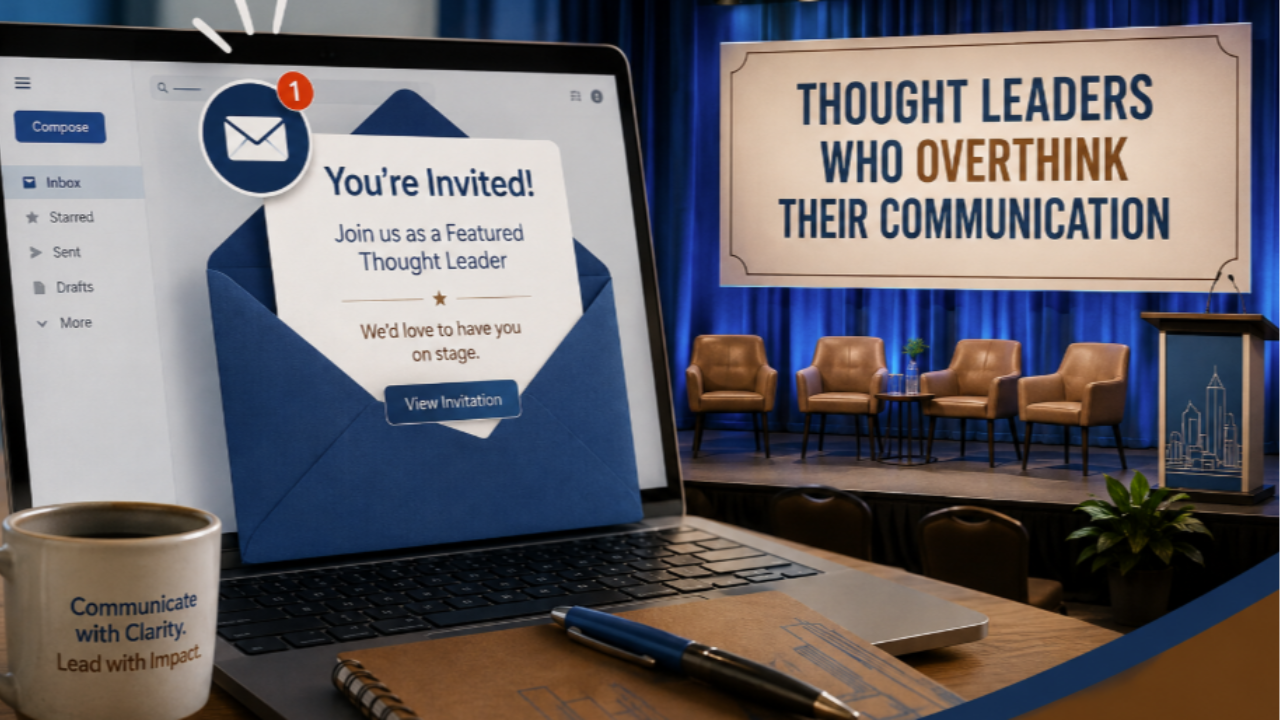
An invitation.
I just got a "Congratulations" email from the team organizing a women's healthcare leadership conference.
They invited me to speak at their annual event in Houston.🤗
I'm going to be there.
I'll show up.
I'll speak up.
🧨I'll help thought leaders stop overthinking their communication.
I'll show them how to avoid jargon and buzzwords, and choose their words carefully.
I'll teach them to share their successes through stories and examples that connect with real people.
I'll help them amplify their voices in a steady, confident way that draws people in and makes an impact.
Here's the truth:
I've noticed that even people in top positions often struggle to share what they know clearly and confidently.
➡️Having a title on an org chart or business card doesn't mean much if you can't communicate in a way that truly connects with people.
You don’t need a formal invitation to refine your communication skills.
It’s a decision about how you speak up and show up.
I’m just encouraging you to be bold....
The Day Our Communication Really Changed
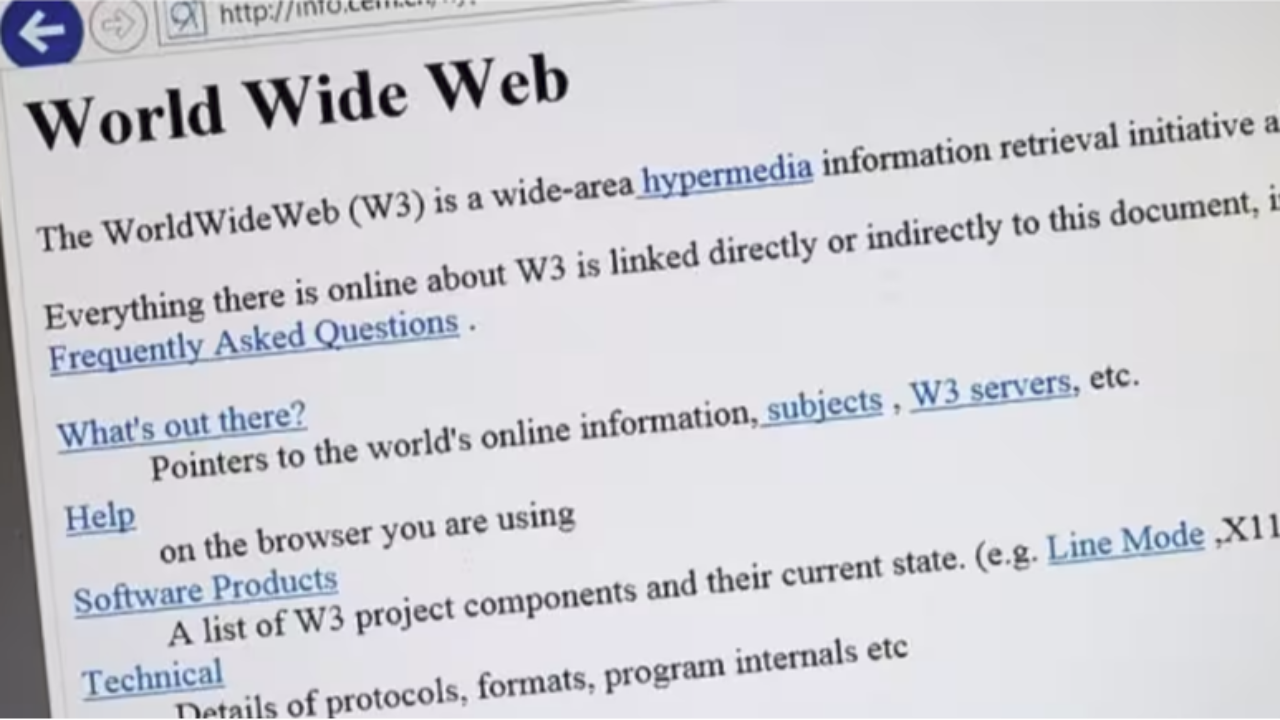
The first website.
The world's first website went live 35 years ago today. 🎂
The site was actually called the World Wide Web project and explained how to use it.
What the heck has happened to our world and communication since August
6, 1991?
I would need a decade, multiple therapists, and a big pot of coffee to "go there." 😯
For now, we can laugh about a simpler way of life.
🧨Can you relate to my Top 10 Internet Memories?
1. Using an AOL email address
2. Hearing that ear-piercing dial-up sound on the modem
3. Having to hang up the telephone to go online
4. Saying WWW before the actual web address (no one said "URL")
5. Receiving lengthy emails from the King Prime Minister Ruler of the Emirates that he had a $20m trust fund account from my long-lost maternal great-uncle
6. Understanding that having a virus didn't require a medical diagnosis
7. Printing interesting webpages
8. Grabbing free AOL floppy discs...everywhere
9. Watching images load line by line
10. Using Netscape Navigator
Interestingly, ...
The Power is Not in Your Words

No words.
Our nonverbal communication is much more powerful than our spoken words.
Research from Nature-dot-com says that people don’t just listen to what we say.
They also interpret our facial expressions, body language, and vocal cues at the same time. 💯
You don’t have to say much because nonverbal cues and clues can substantially shape perceptions of emotion, credibility, and trust.
The bottom line: Be a people-watcher.
Pay attention to body language and physical energy. Equally important, be aware of your own facial expressions and gestures when interacting with others.
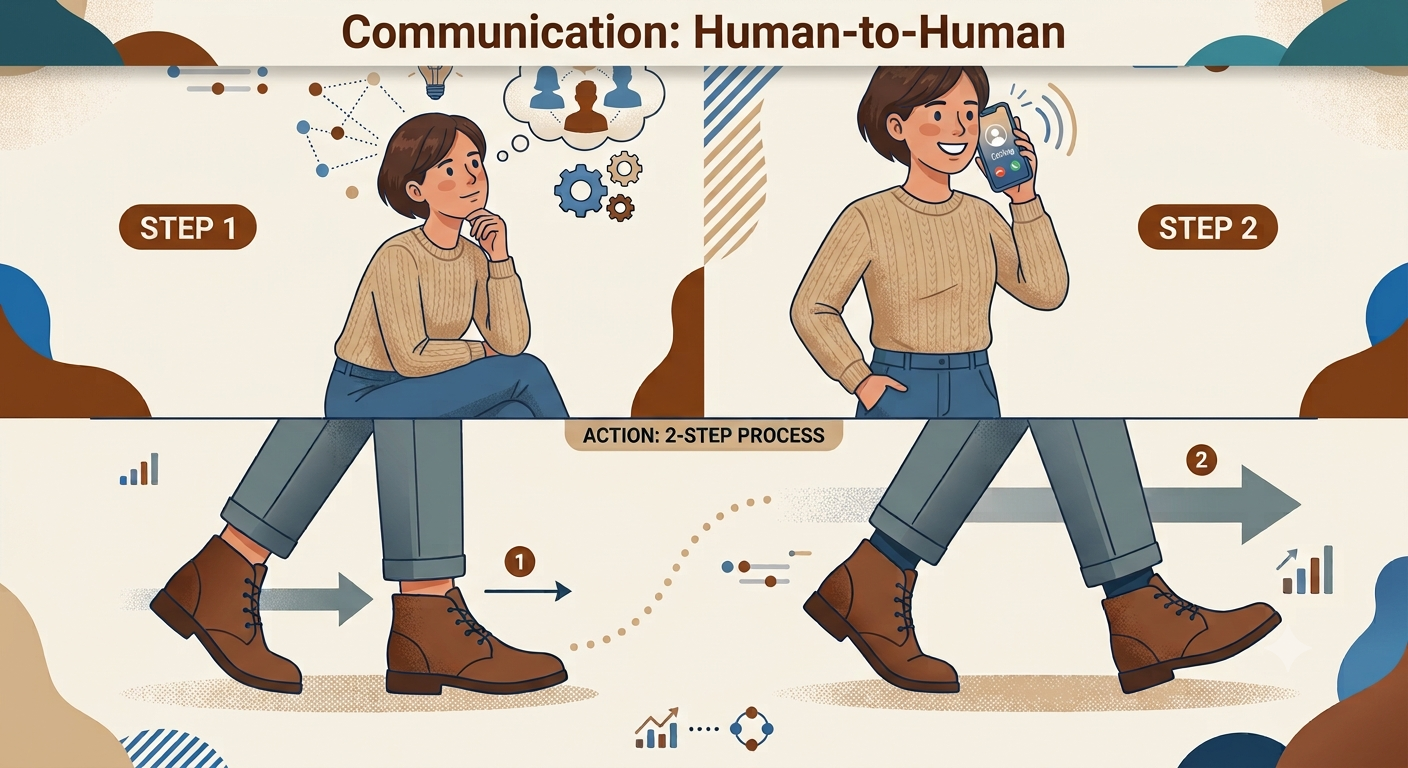
The Golden 2-Step Process in Communication

I thought of you.
I picked up my phone and called you.
Whether you answered or I reached your voicemail, the first thing I said was:
I was thinking of you.😉
Human-to-human communication.
You have the power to make another person feel special and valued.
No texting.
No reason.
It’s just a simple two-step process based on our shared humanity and kindness.
➡️Step 1. Think of someone.
➡️Step 2. Pick up the phone.
Here’s the truth:
A small gesture like this can brighten someone’s day.
It might even make your day better. You could find yourself smiling.
If you end up talking in real time, it doesn’t need to take long.
Even a few minutes are enough, no matter how busy you are.⌚
Put some positive energy into the world.
Don't overthink.
Don't complicate it.
Take action.
You got this.🤗
PS: This works in business and at home.
3 Words That Undermine Leaders

Three words can reveal a lot about A/E/C managers and principals.
This phrase reflects your leadership style.
🚩When new hires hear this response, they often feel discouraged. It can be frustrating and even make them feel inadequate.
Saying 'figure it out' often leaves people feeling undervalued, especially when they’re trying to learn how things work.
Newcomers to our industry want to understand the basics so they don't have to keep asking the same questions.
➡️Where can I find this?
➡️Could you please clarify the punch list for me?
➡️Is this the latest documentation?
Leaders should recognize that new team members want to learn, do well, and meet expectations.
If someone still needs a lot of help after a reasonable amount of time, there may be a bigger issue.
But in the first few months, it’s normal to feel overwhelmed.
There’s a learning curve.
Responding with 'figure it out' comes across as passive-aggressive.
It can negatively impact company culture, team morale, and project results.
When leaders...
The Best Gift to Give this Holiday Season

The best gift of communication you can offer anyone is the gift of your attention.
It's great year-round.
🔷It costs nothing and requires no shopping.
🔷There’s no need for fancy wrapping.
Paying close attention requires deep listening skills—fully focusing on the speaker, listening not just to the words but also to tone, body language, and emotions.
You can’t genuinely understand someone else’s perspective if you miss a few words or sentences they are expressing to you.
Learn how to pay attention without distractions. This is priceless.
Focus on others and block out distractions—no phones, pings, or alerts.😮
Don't try "faking someone out" by acting like you're engaged when you're mentally drifting.
Forget the email that needs to be sent.
Forget that the car needs gas.
Forget about stopping at the store.
The truth is that people notice when you're "checked out." Don't kid yourself.
🎯The better way is to be more self-aware.
Exceptional communicators catch themselves qu...
Strategic Networking Grows Business

Showing up at a networking event or conference doesn't count as business development.
Choose events carefully and strategically so you attract new relationships and opportunities.
Yes, this includes making small talk 😮
Before putting something on your calendar, consider:
🎯Will your ideal clients be there?
🎯What is your intention?
🎯Who do you want to meet, and why?
🎯How will you mingle and meet new people?
🎯How will you introduce yourself?
There is an art and science to successful networking.
Do you and your teams know how to generate leads and create exciting opportunities at seemingly ordinary events?
If not, you're wasting precious time and your firm is losing money.
PS: Get your nose out of your phone!
Why Sharing Clean Data Is Essential in A/E/C

Sharing clean data and communicating effectively comes down to hard-wired brain science.
You may have noticed that technically skilled folks in A/E/C are all about visuals, from blueprints to data visualization.
The key to improving interpersonal communication is to weave visual language into your speaking and writing.
For example, visual communicators may say:
➡️I get the picture.
➡️Let's look at this from a new perspective.
➡️We can view the data on the app.
You'll form deeper connections, reduce miscommunication, and build trust when you understand the way others process language. (There are two additional communication preferences, or modalities.)
Knowing someone else's preferred modality transforms relationships — and profits.
Imagine how much easier it is when you can apply this in meetings and on job sites.
The 1 Safety Term Many in A/E/C Are Missing

Yes, physical safety and mental health must always be top priorities in our industry.
There's a different kind of safety that firms often overlook: Psychological safety.
It's an essential form of communication.
Psychological safety means that staff feel comfortable and safe in expressing their emotions, using their voices, and sharing concerns — without judgment or repercussions.
➡️It directly impacts emotional well-being, talent retention, performance, and job dissatisfaction.
When leaders in my training programs are unsure of this practice, I worry.
Are your emerging leaders and executives using psychological safety practices to support staff?

Miscommunication: The Hidden Drain on Project Margins

A/E/C projects don’t typically lose money because of technical mistakes.
Projects lose money because of miscommunication.
You see it every day:
👉A missed client cue.
👉A poorly led meeting.
👉An unclear email that delays project handovers and brings cost overruns.
Leaders often underestimate the cost of these misunderstandings.
The frustrating part is that most miscommunication in our industry is avoidable. 🎯
The blunders above chip away at trust, delay schedules, and shrink profit margins.
📈In today’s competitive market, communication isn’t a “soft skill.”
It’s a revenue skill.
Is your team helping to protect profits?

