Susan Young's
Amplify Blog
How Intentional Communication Can Engage Your Team

The right way.
Good communication isn't about giving people more information.
It’s about being deliberate about what people actually need to know—and when they need to know it.🙌
Before sending an email, making an announcement, starting a meeting, or moving a project forward, stop and ask three questions:
1. Who needs this information?
Not everyone. Identify who will decide, act, or be affected.
2. What do they need to understand?
Information without context can create more questions than answers.
What does this person need to understand to do their job, decide, or respond appropriately?
3. What happens if they don’t know?
This question often gets overlooked.
Could it cause a missed deadline, a wrong decision, rework, or a frustrated member, client, or stakeholder?
➡️What happens if a message goes in the wrong direction?
Here's the truth: Communication becomes much more effective when you answer these questions *before* the information goes out, not after confusion starts.🤔
The goal isn't to commu...
The Real Cause of Operational Failures

Reality check.
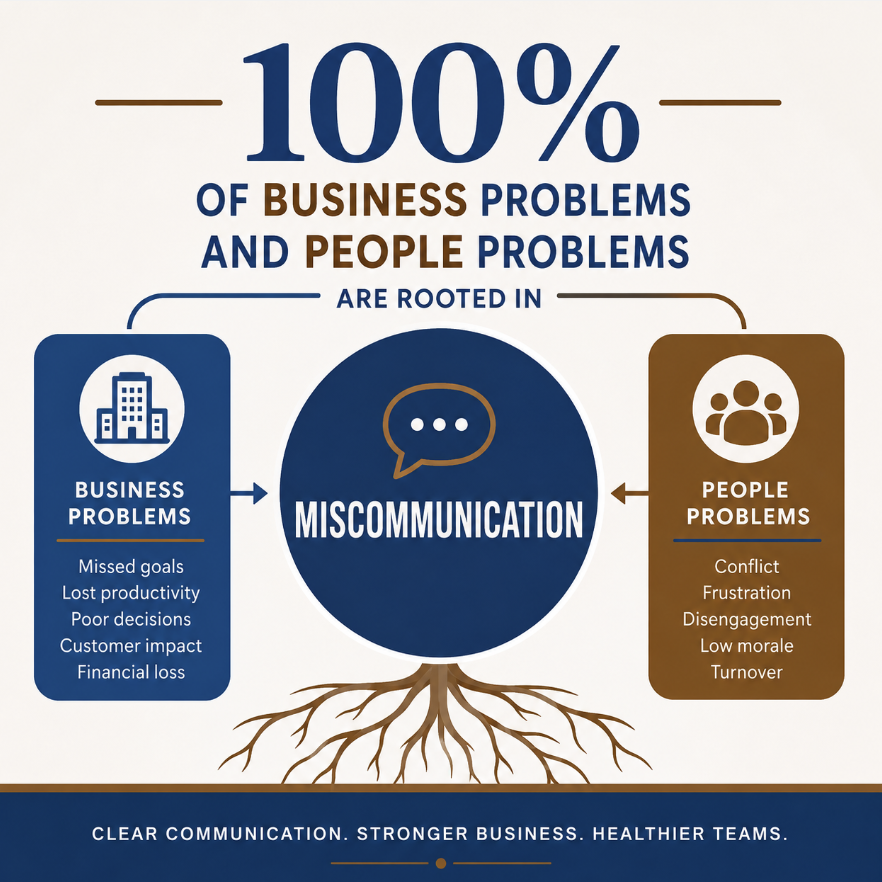
Nearly 100% of operational problems and people problems stem from communication challenges.
It's a pretty hefty price.
Let that sink in.
The Power is Not in Your Words

No words.
Our nonverbal communication is much more powerful than our spoken words.
Research from Nature-dot-com says that people don’t just listen to what we say.
They also interpret our facial expressions, body language, and vocal cues at the same time. 💯
You don’t have to say much because nonverbal cues and clues can substantially shape perceptions of emotion, credibility, and trust.
The bottom line: Be a people-watcher.
Pay attention to body language and physical energy. Equally important, be aware of your own facial expressions and gestures when interacting with others.

The Golden 2-Step Process in Communication

I thought of you.
I picked up my phone and called you.
Whether you answered or I reached your voicemail, the first thing I said was:
I was thinking of you.😉
Human-to-human communication.
You have the power to make another person feel special and valued.
No texting.
No reason.
It’s just a simple two-step process based on our shared humanity and kindness.
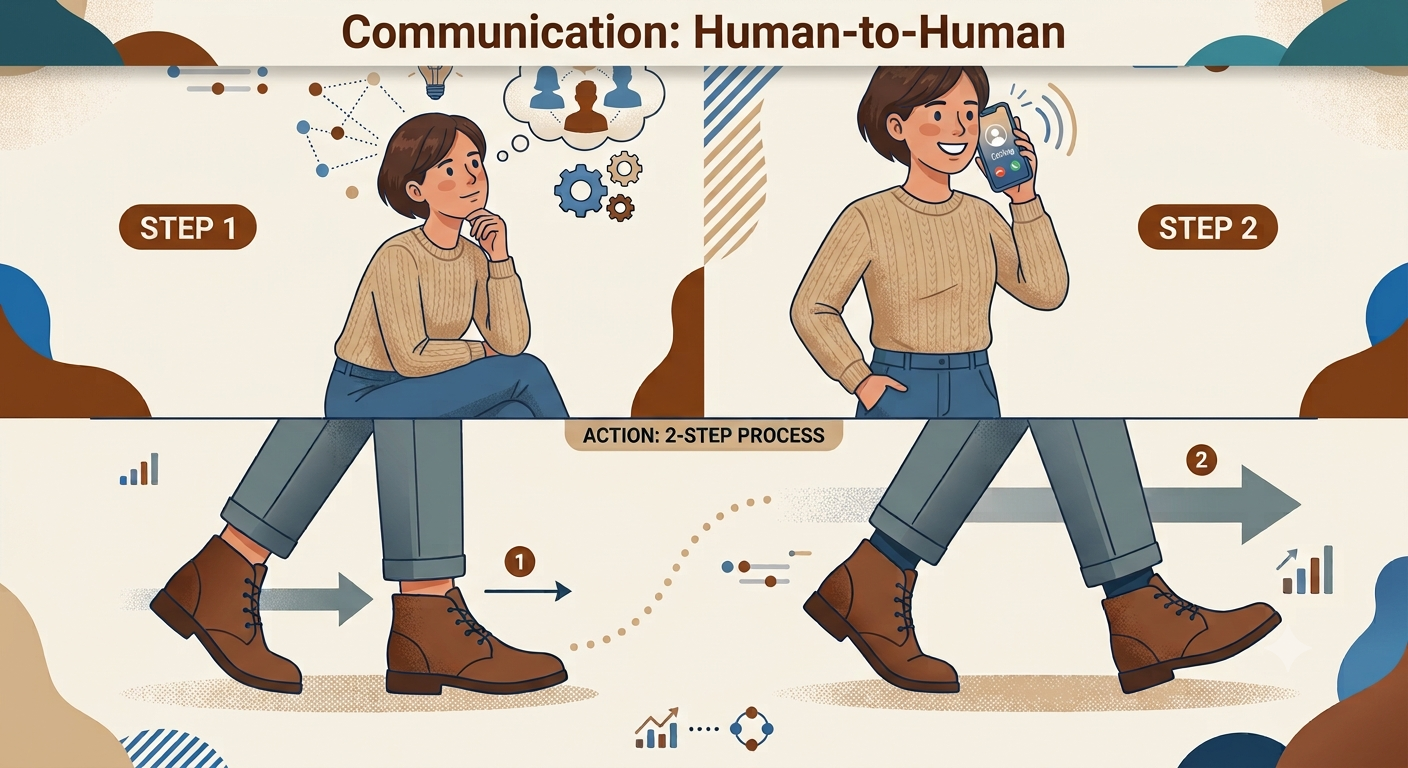
➡️Step 1. Think of someone.
➡️Step 2. Pick up the phone.
Here’s the truth:
A small gesture like this can brighten someone’s day.
It might even make your day better. You could find yourself smiling.
If you end up talking in real time, it doesn’t need to take long.
Even a few minutes are enough, no matter how busy you are.⌚
Put some positive energy into the world.
Don't overthink.
Don't complicate it.
Take action.
You got this.🤗
PS: This works in business and at home.
The Moments that Define Us

Defining moments.
My first memory of seeing the Statue of Liberty.
➡️In 1970, when I was in second grade in New Jersey, my class took a trip to the Statue of Liberty.
It was only a 30-minute drive from our cushy, middle-class neighborhood.
Back then, everyone brought metal lunch boxes to school.😯
But for this trip, our lunches were packed in brown paper bags instead.
My classmates and I sat at the base of the Statue and ate lunch, looking out over Liberty Island.
I finished most of my sandwich, walked to the rusted, weathered garbage can, and tossed my bag on top of the pile. 🗑️
A minute later, I saw a homeless man reach into the can and take my bag. He began eating what I had thrown away.
That night, I asked my parents why anyone would eat food from the garbage.
They answered me in just three sentences.
I cried.
And I never forgot that moment.
➡️The next year, in 1971, a classmate called me a dirty J*ew.
I was only 9 years old. 😢
➡️1976- I successfully lobbied the principal at my middle school for ...
Before Investing in Another AI Tool, Do This

Accelerating confusion.
The chaotic pace of change with AI can feel overwhelming.
From proposals and documentation to enterprise risk and conflict resolution, firms that strategically embrace AI have a significant competitive advantage.
➡️As these changes accelerate into 2026, A/E/C leaders faces a key question:
Is your firm's communication and decision-making infrastructure keeping pace with your technology investments?
High-performing firms don't simply use more tools.
They're establishing clear communication standards, governance protocols, accountability, and measurable business outcomes.💯
Only six months remain to align leadership priorities in 2026.
Before the end of the year, A/E/C executives should prioritize:
✅Meaningful performance measures that connect AI investments to business results—not just technology adoption.
✅Consistent communication standards that keep AI-generated information accurate and client-ready.
✅Clear expectations that help employees use AI confidently, responsibly, ...
How Smart A/E/C Marketers Add Value to Their Firms

Predicting outcomes = impossible.
Looking for patterns and trends = invaluable to stakeholders. 📈
This was a key takeaway from a recent SMPS—Society for Marketing Professional Services - San Antonio chapter meeting.
New A/E/C marketers who want to grow their careers must know how to spot trends to help managers make informed decisions.
💯One of the presenters, Cleary Zimmerman's Joyce Watson, CPSM, encouraged emerging leaders to be curious and collaborative. I agree with Joyce and her co-presenter Audra Allen that these traits drive growth.
⚠️Guessing is very expensive in business.
The bottom line is knowing how to ask quality questions, listen deeply, and identify patterns that others miss.

Deciding to Prioritize Your Communication

You decide.
Taking small, consistent actions each day can be an effective way to make progress toward your goals.
If you have reasons for not taking even a small step toward your goal, consider whether any of those reasons might be holding you back.
🚩Another word for reasons is excuses.
Sometimes, what we see as reasons could also be seen as obstacles to progress.
Yes, we're all busy. Many people in A/E/C feel burned out, overwhelmed, or anxious. The world can feel beyond chaotic.
And, even in tumultuous times, many people try not to let their circumstances keep them stuck.
Here's something to consider: Some of the most important conversations aren’t with bosses or partners.
The conversations and communication you have with yourself are critical. 💯
Your self-talk. Your internal chatter. This is what matters most.
🥇Your internal narrative shapes your mindset and success.
When you bypass reasons and focus fully on your goal, consistent action and accountability can help you reach the finish lin...
Why Tech Savvy Professionals Must Embrace Marketing

Today, everyone is in marketing.
Most A/E/C professionals, however, don't see themselves as marketers, business developers, or salespeople.
Especially highly skilled technical people.
You might not have a degree in marketing or sales. It probably wasn't your original plan.😕
But technical professionals often need to scale back the tech talk that can confuse stakeholders and clients.
Most are interested in the end result, not the process. They want to see the WOW—the finished product.⬅️
Project managers, superintendents, and estimators need a mindset shift that embraces marketing as part of their roles.
An example I heard years ago will likely resonate with you: Sell the painted room, not the paint.
🎯Here’s the bottom line: Those who focus on the WOW, not the HOW, connect and engage with stakeholders.
This is your ticket to increasing trust and profits.
3 Words That Improve Confidence and Lead Generation

Three words.
These three words are the core strategy for increasing your revenue.
So why do so many A/E/C firms struggle to win more pursuits?😕
If you don't see how revenue ties to these three words, profitability stays flat, and your credibility can suffer.
Here's the key: Business development and relationship-building start with communication.💯
Improving your hit rates comes down to one actionable strategy: Make small talk.
Easy, light-hearted conversations build deeper connections, generate more referrals, and drive sustainable growth.📈
Technical people who aren't comfortable interacting with others miss chances to generate leads.
🎯Make small talk your competitive advantage.
The bottom line is that engagement grows business.