
Susan Young's
Amplify Blog
Working at the World Trade Center: A Life Lesson
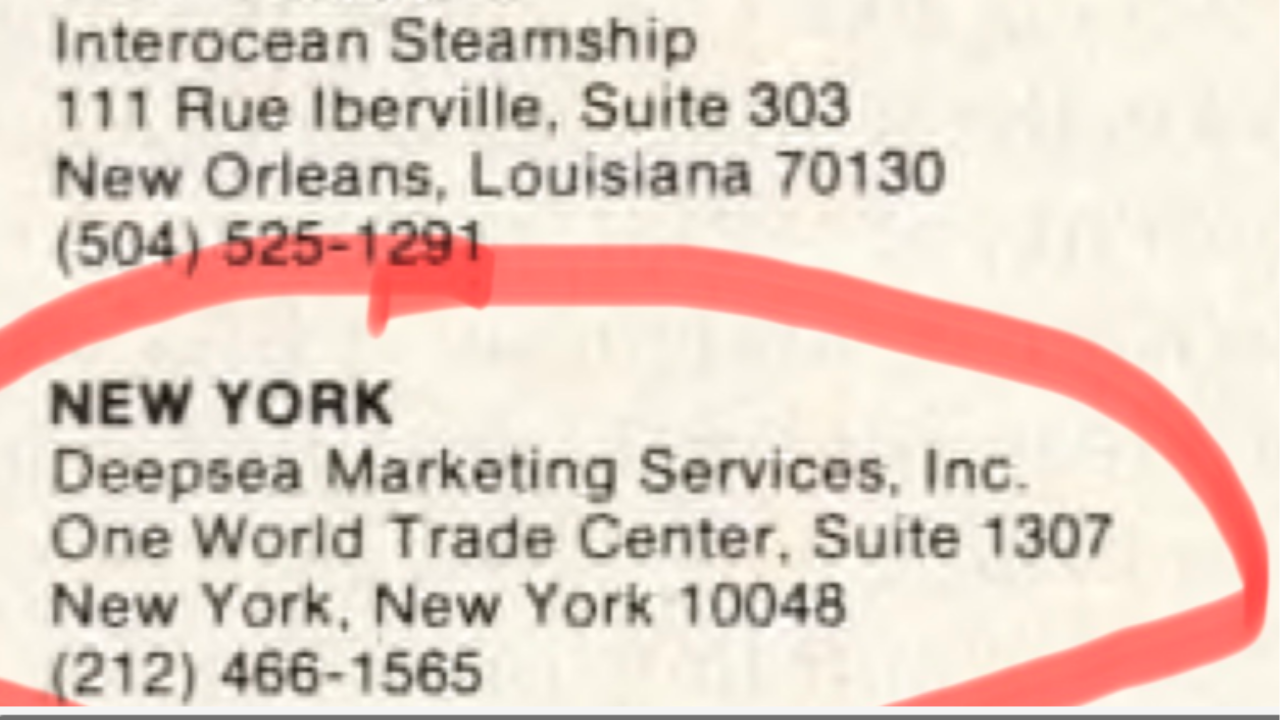
Your first real job.
They say you always remember your first.😍
I graduated from college and landed my first real job.
It was at the World Trade Center.
Tower 1.
The 13th floor.
I was initially shell-shocked by the ungodly 40-minute train commute from central New Jersey into lower Manhattan.
I went from college hangovers to harried businesspeople in suits. 😎
It was the summer of 1984. I listened to my Sony Walkman and the song "The Warrior" from Scandal.
The greatest lesson I learned from working at the World Trade Center is this:
🎯People-watching is priceless.
Why pay for entertainment when a slice of real life and stories are all around?
I'm glad there were no cell phones and tech distractions.
I quickly discovered the best part of the day was lunch! 🙌
I would sit outside and eat lunch at the fountains between Towers 1 and 2.
Tobin Plaza.
🔷Watching tourists take pictures with Kodak Instamatic film cameras.
🔷Seeing couriers on bicycles delivering who knows what to who knows who.
🔷Catching glimpses ...
The Day Our Communication Really Changed
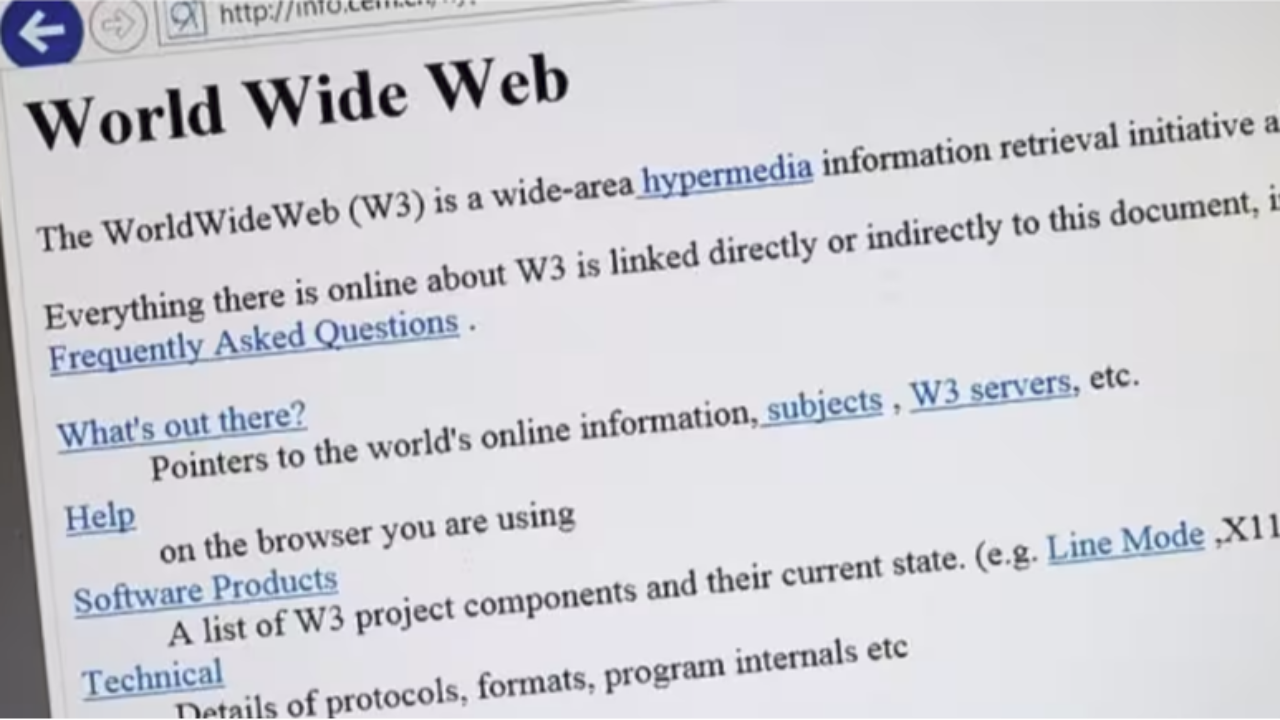
The first website.
The world's first website went live 35 years ago today. 🎂
The site was actually called the World Wide Web project and explained how to use it.
What the heck has happened to our world and communication since August
6, 1991?
I would need a decade, multiple therapists, and a big pot of coffee to "go there." 😯
For now, we can laugh about a simpler way of life.
🧨Can you relate to my Top 10 Internet Memories?
1. Using an AOL email address
2. Hearing that ear-piercing dial-up sound on the modem
3. Having to hang up the telephone to go online
4. Saying WWW before the actual web address (no one said "URL")
5. Receiving lengthy emails from the King Prime Minister Ruler of the Emirates that he had a $20m trust fund account from my long-lost maternal great-uncle
6. Understanding that having a virus didn't require a medical diagnosis
7. Printing interesting webpages
8. Grabbing free AOL floppy discs...everywhere
9. Watching images load line by line
10. Using Netscape Navigator
Interestingly, ...
Why Smart Leaders Don't Waste the Summer Slowdown

Toes in the sand.
Summer can feel like a chance to slow down and take a break.
But the best leaders use this time to spot problems before they become costly.🎯
When schedules are hectic, it’s easy to miss communication gaps.
More meetings happen, decisions are delayed, processes become shortcuts, and people start making assumptions.
That’s what I love about summer: the slower pace creates space to reflect.
➡️This is a good moment to ask yourself: What will you change now?
• Are there meetings that no longer have a clear purpose?
• Where do decisions tend to get stuck?
• Is there important knowledge that only one person knows?
• Which conversations have been put off because everyone was too busy?
When things get busy, problems show up.😯
When things slow down, take the chance to fix them now.🧨
Leaders who use the summer to improve communication and decision-making often start the fall with more clarity, stronger momentum, and fewer surprises.
What is one problem you can start working on right now?
How Smart A/E/C Marketers Add Value to Their Firms

Predicting outcomes = impossible.
Looking for patterns and trends = invaluable to stakeholders. 📈
This was a key takeaway from a recent SMPS—Society for Marketing Professional Services - San Antonio chapter meeting.
New A/E/C marketers who want to grow their careers must know how to spot trends to help managers make informed decisions.
💯One of the presenters, Cleary Zimmerman's Joyce Watson, CPSM, encouraged emerging leaders to be curious and collaborative. I agree with Joyce and her co-presenter Audra Allen that these traits drive growth.
⚠️Guessing is very expensive in business.
The bottom line is knowing how to ask quality questions, listen deeply, and identify patterns that others miss.

How Small Talk Drives Business

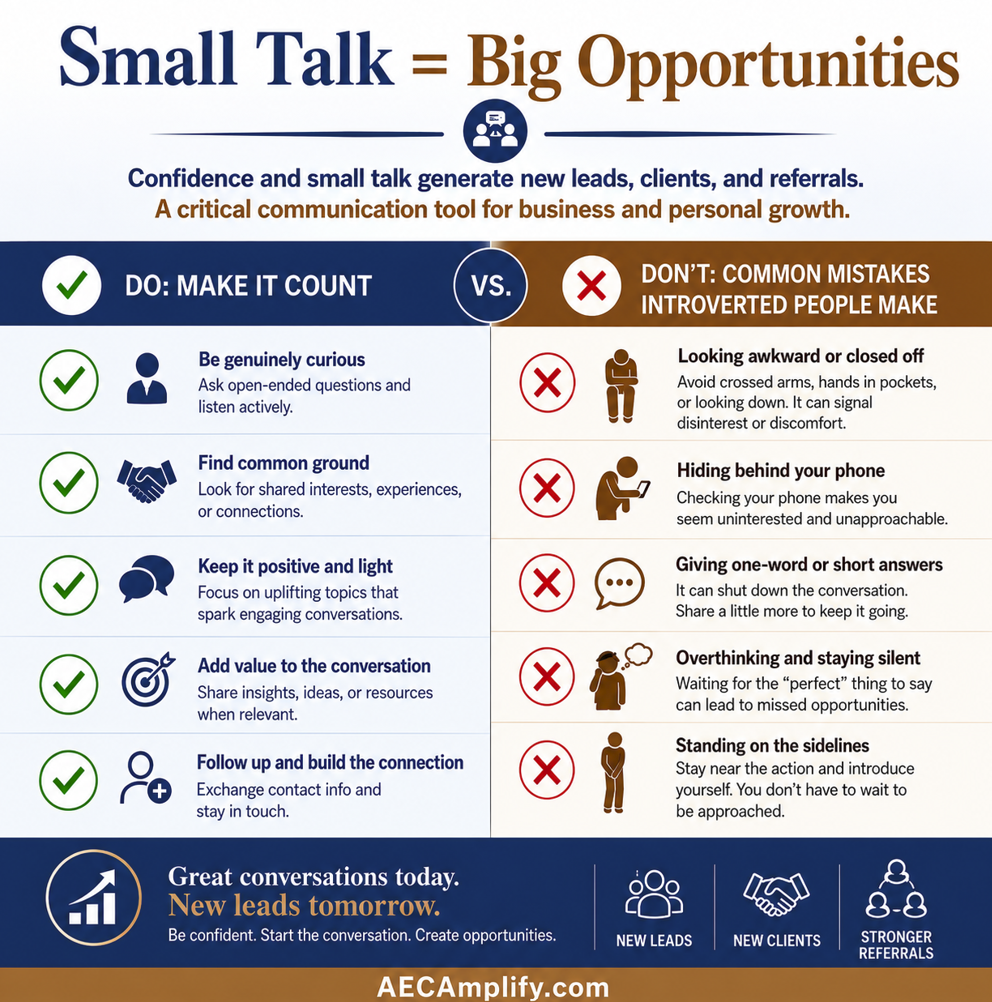
Small talk is a big deal.
Here's why it matters.
Because it drives revenue and requires subtle, respected confidence.
Yet most say low confidence holds them back at networking events, meetings, and conferences.😕
No more excuses!
➡️Use the communication tips below to boost your confidence and create stronger business connections.
 .
.
How to Deepen Relationships By Reading Body Language

You know how to build a room.
But do you know how to read a room?
Technical skills only get you so far.
In business, growing revenue isn't about technology or job titles.
It's about spotting subtle communication cues that give you:
🔷Greater influence
🔷New levels of respect
🔷Deeper connections
To get ahead, notice both verbal and nonverbal cues.
Pay attention to others' words, pacing, gestures, and expressions.
Here's the truth: Reading body language is key to negotiating and resolving conflict.
I learned this 30 years ago so I know it works. 💯
People who can read a room also exude confidence that most competitors lack.
Notice clues in your next interaction and start reading the room for a competitive edge.
How to Build A Powerful Business Development Team

Most of us expect to hear about design-build in the field, but let's talk about design-build as it applies to business development.
How are you going to sustain revenue and year-over-year growth?
It’s about designing and building your business development team.
📈To increase profitability and develop younger staff, firms must invest in project managers, superintendents, and estimators to help capture more pursuits.
Designing and building higher-level teams requires critical thinking skills, the ability to ask open-ended questions, the willingness to pivot and respond, and the confidence to articulate technical data to stakeholders.🎯
The coaching model I’m describing is an integral, ongoing part of leadership development.
It involves not just formal or occasional mentoring but also daily interactions in which PMs and other senior leaders identify in-the-moment teaching opportunities.💯
Business coaching—combined with mentoring—uplevels communication, clarity, and confidence.
This applies to le...
How to Get Noticed by Top A/E/C Executives

Communication tip for aspiring construction PMs and leaders:
Knowing the project lingo is good.
📈Knowing the PROFIT lingo is when C-suite execs start listening.
Speak their language and watch your career path transform.
The High Cost of Dysfunctional Teams

Communication tip:
Teamwork is your competitive advantage.
Here's the truth: A lack of trust amongst A/E/C teams brings dysfunction.
Messy interactions and communication breakdowns lead to misunderstandings, cost overruns, reworks, low morale, and labor shortages.
Successful leaders are willing to quickly and honestly address chaos to diffuse conflicts and keep projects on track.
How do you manage conflicts and dysfunctional teams?
Reach out if your team needs support.
You're Losing Because Your PMs Don't Know the Process

Back up the bus, A/E/C leaders.
Most newer project managers, estimators, and superintendents aren't familiar with the process of being shortlisted.
Still, you expect them to be confident and well-spoken in seller-doer interviews.
Let's lay a solid foundation for these pros so they have a deep understanding of business development.
When there's a lack of clarity, bids go to your competitors.
To avoid losing revenue, take the time to educate technical staff. 📈
They influence interview panels.
Confidence and business acumen are what owners and stakeholders look for when awarding bids.

