
Susan Young's
Amplify Blog
Why Smart Leaders Don't Waste the Summer Slowdown

Toes in the sand.
Summer can feel like a chance to slow down and take a break.
But the best leaders use this time to spot problems before they become costly.🎯
When schedules are hectic, it’s easy to miss communication gaps.
More meetings happen, decisions are delayed, processes become shortcuts, and people start making assumptions.
That’s what I love about summer: the slower pace creates space to reflect.
➡️This is a good moment to ask yourself: What will you change now?
• Are there meetings that no longer have a clear purpose?
• Where do decisions tend to get stuck?
• Is there important knowledge that only one person knows?
• Which conversations have been put off because everyone was too busy?
When things get busy, problems show up.😯
When things slow down, take the chance to fix them now.🧨
Leaders who use the summer to improve communication and decision-making often start the fall with more clarity, stronger momentum, and fewer surprises.
What is one problem you can start working on right now?
Deciding to Prioritize Your Communication

You decide.
Taking small, consistent actions each day can be an effective way to make progress toward your goals.
If you have reasons for not taking even a small step toward your goal, consider whether any of those reasons might be holding you back.
🚩Another word for reasons is excuses.
Sometimes, what we see as reasons could also be seen as obstacles to progress.
Yes, we're all busy. Many people in A/E/C feel burned out, overwhelmed, or anxious. The world can feel beyond chaotic.
And, even in tumultuous times, many people try not to let their circumstances keep them stuck.
Here's something to consider: Some of the most important conversations aren’t with bosses or partners.
The conversations and communication you have with yourself are critical. 💯
Your self-talk. Your internal chatter. This is what matters most.
🥇Your internal narrative shapes your mindset and success.
When you bypass reasons and focus fully on your goal, consistent action and accountability can help you reach the finish lin...
3 Words That Improve Confidence and Lead Generation

Three words.
These three words are the core strategy for increasing your revenue.
So why do so many A/E/C firms struggle to win more pursuits?😕
If you don't see how revenue ties to these three words, profitability stays flat, and your credibility can suffer.
Here's the key: Business development and relationship-building start with communication.💯
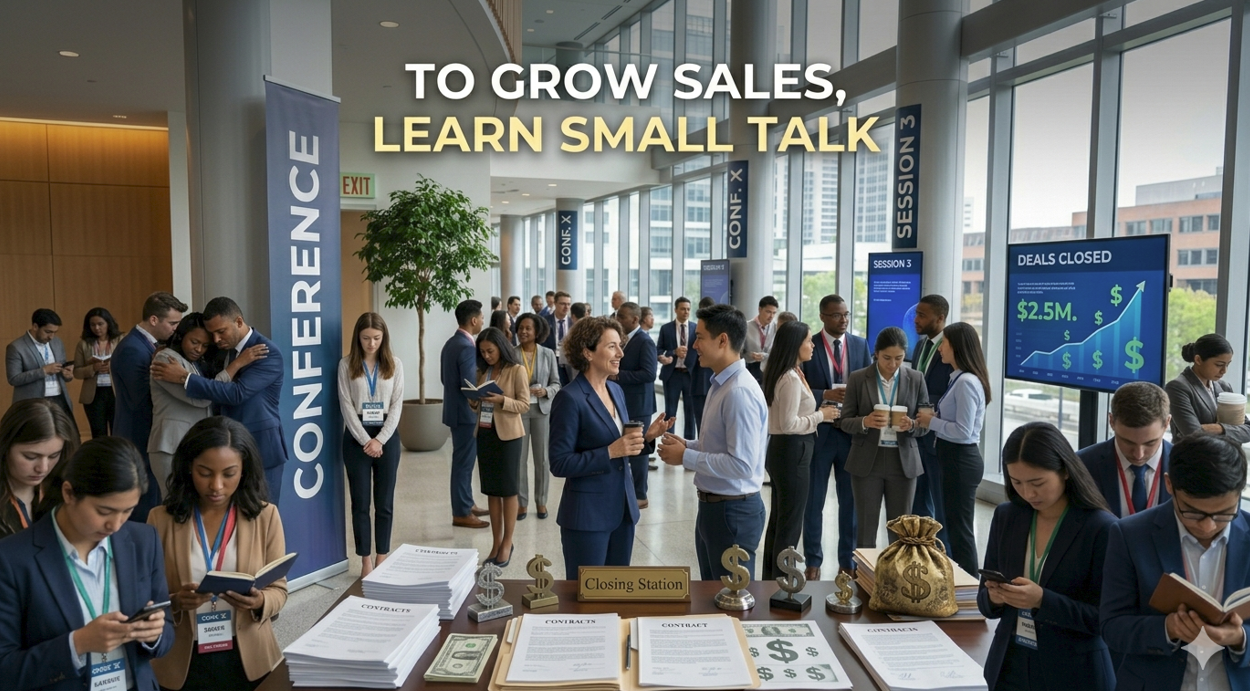
Improving your hit rates comes down to one actionable strategy: Make small talk.
Easy, light-hearted conversations build deeper connections, generate more referrals, and drive sustainable growth.📈
Technical people who aren't comfortable interacting with others miss chances to generate leads.
🎯Make small talk your competitive advantage.
The bottom line is that engagement grows business.
Being Boring is Inexcusable at Work

Forgettable.
That's what happens when you're boring at work.
This isn't about personality.
🥇It's about perception and influence.
🥇It’s about differentiating yourself and your firm.
Dull people are low-impact communicators who disengage stakeholders.
Decision-makers don't award bids to flat communicators that seem to lack momentum. ⚠️
Despite technical strength, you'll likely lose credibility—and work—if your communication is flat.
🎯Here's the truth: Prospects and clients equate engagement and clarity with influence and leadership.
I've spent 26 years teaching A/E/C leaders to be memorable in business development and client-facing meetings.
I teach them to share heartfelt, engaging stories and to be compelling and clear, so they connect deeply with others.
Being boring means being invisible, because you are not top of mind.😕
Take the initiative and start honing your communication skills now so people remember you.
Those who commit to continuous improvement and easily engage their audience stand out....
Leaving an Executive Legacy in A/E/C

Every A/E/C firm has a few people who carry its legacy. It's like runners passing the Olympic torch.
In our industry, this is called knowledge transfer or “institutional instinct.”
👉Experienced executives know how to (subtly) read clients.
👉They know when a project is drifting.
👉They know what not to say in a tense meeting.
None of this is written down.
This knowledge doesn’t transfer automatically.
It’s certainly not part of onboarding.
Think about your first time driving. 🚗
You study first, but once you’re behind the wheel, the manual is irrelevant.
You have to experience the car actually moving. It's about trusting your instincts and reacting in a split-second decision.
As a growing number of senior executives retire this year, A/E/C firms without a structured knowledge-transfer system will feel the pinch.
This loss churns through project delivery, client trust, and revenue.
Here’s the truth: Decades of judgment are irreplaceable. 💰
You have the power and wherewithal to prepare the next generatio...
Disappointed? These 9 Words Will Get You Back on Track

If you’ve ever veered off the success path and detoured into “Pity City,” there’s a powerful, yet simple phrase to get back on track.
➡️Nine short words. That’s it.
When I’m in the middle of a struggle, rough patch, or “woe is me” moment, I mumble these words to myself.
Sometimes out loud. Sometimes in my head.
🔷Yep, I turn to a 9-word phrase that always helps me refocus and reframe.
These words remind me of the fortitude, power, and strength I have to persevere.
Many women, especially those in construction, navigate a litany of challenges that test their physical, emotional, and mental states every single day.
👷♀️Our observance of Women's History Month reminds us of the pioneering women who have shaped our industry. And those who continue to work and lead in the contruction field. 🥇
Regardless of your gender, my nine words…stay with it, stay with it, stay with it…reminds us of our collective purpose and why we do what we do.
You got this!
The Real Foundation of A/E/C Communication

Executives in A/E/C who know that negotiation is an integral part of business development and marketing presentations see their hit rates explode.
🚩Too many firms focus on soft skills while overlooking the art and science of negotiating with stakeholders.
Your technical teams may not have been taught BD and negotiation in classrooms.
It's a learned skill that can be developed.🎯
Are negotiation skills in your communication toolbox?
Passive-Aggressive Leadership is Quietly Sabotaging Your Bottom Line

Most A/E/C executives don't notice when leaders are being apathetic. You're often surrounded by it.
Across offices and jobsites, passive-aggressive communication is eroding trust, delaying approvals, and increasing costly mistakes.
😮Does this sound familiar?
“I guess that’s fine…” can bring approval delays.
Public praise and private undermining can lead to staff withholding critical project info.
Subtle gaslighting, like “That’s not what I said,” can cause frustration and confusion.
Here’s the impact:
🚩Project managers stop escalating risks
🚩Younger staff disengage
🚩Field-office tension increases
🚩Clients sense dysfunction
Let’s face it: Direct, accountable communication isn’t just a “soft skill.”
It’s operational risk management—and every missed conversation is a risk you can’t afford.
Ask yourself: Are you modeling the leadership your firm needs?
👉 Do your leaders address issues directly—or sideways?
👉 Is feedback clear and timely?
👉Are project conflicts resolved or buried?
Strong firms don’t toler...
Accountability Is Not a People Issue

When accountability breaks down, leaders often assume it’s a people issue.
But accountability is a structural outcome. ⬅️
It’s rooted in how roles, processes, and expectations are established across organizations.
Warning signs show up in your A/E/C firm, looking like:
👉Confusion about who owns what.
👉Work slipping through cracks.
👉Leaders stepping in to “fix” things.
👉Teams feel blamed instead of supported.
👉Repeated breakdowns in the same places.
Accountability isn’t enforced; it’s designed.
It’s the result of clear ownership, transparent processes, and proactive communication.
🎯Here's the truth: Real, sustainable accountability comes from intentional organizational design.
Course-correcting after the fact is not a sound business solution.

